
Care is a partnership
When a person’s dementia progresses, independence is lost, confidence erodes, and the world shrinks.
We built DevaWorld to amplify – not replace – the human connection so that a person can continue to make choices, create and collaborate—the fundamental acts that help us to express who we are.
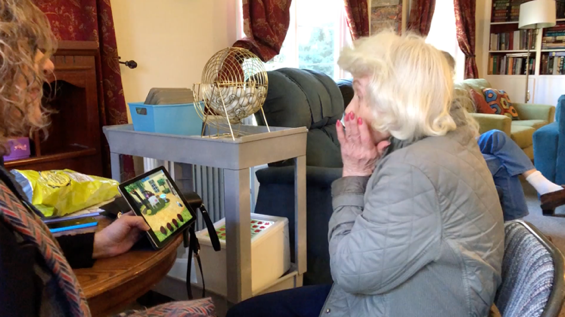
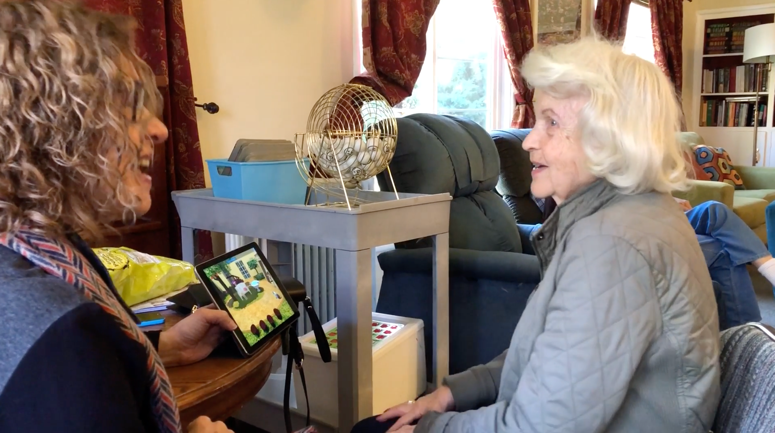
Founded upon dementia care best practices, DevaWorld is a place to explore daily living past, present, and imagined – building meaningful connections that enrich both members of the care dyad.
Working with care partners in the US, France and Australia, we’re only just beginning to understand the power of this new medium to reduce isolation, express feelings and share life’s simple pleasures.
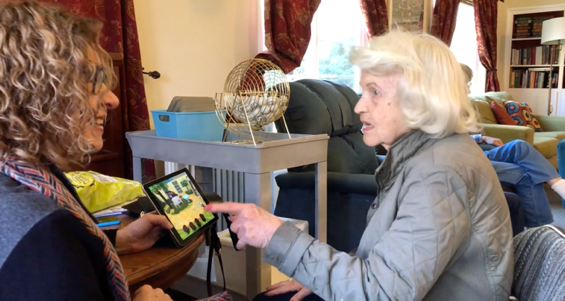
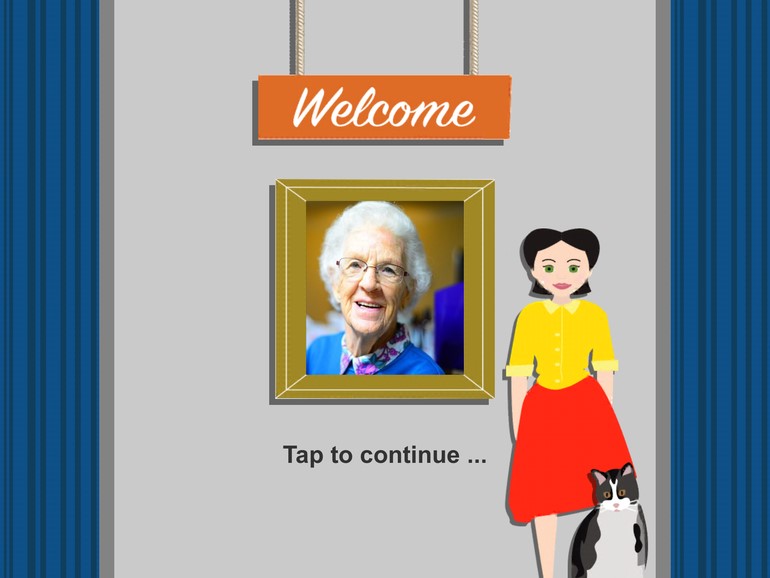
The curtains draw back, and the world opens. Here’s the entrance to DevaWorld. Our player, Freida, sees her photo in the picture frame. (Her supporter has uploaded this photo.) ‘Julie’, in the red skirt, will guide Frieda from scene to scene. Julie both needs help and asks for help, depending on her mood and the activity at hand. Freida likes to give advice. It’s much easier to give advice in DevaWorld than in the actual one.
Background
The inspiration for DevaWorld came from people with physical disabilities playing games in online worlds. During my doctoral studies, I observed the freedoms they enjoyed, and many reported they felt more themselves in the virtual world than they did in the actual one. I wondered: might it be the same for people with dementia?
Could we configure a virtual world where cognitively disabled people felt enabled? This question was the moment when my journey with DevaWorld began.
Shaping the idea
During the ideation phase, I dug deeply into dementia literature, examining many aspects of the condition, including the shift from the biomedical model to the psychosocial one. Definitions of dementia abound; the one that most impacted me was penned by Christine Bryden (nee Boden), the Australian advocate diagnosed with dementia in 1995. Many books and keynote presentations later, Christine still challenges and unsettles me with her profound insights. Here is her definition:
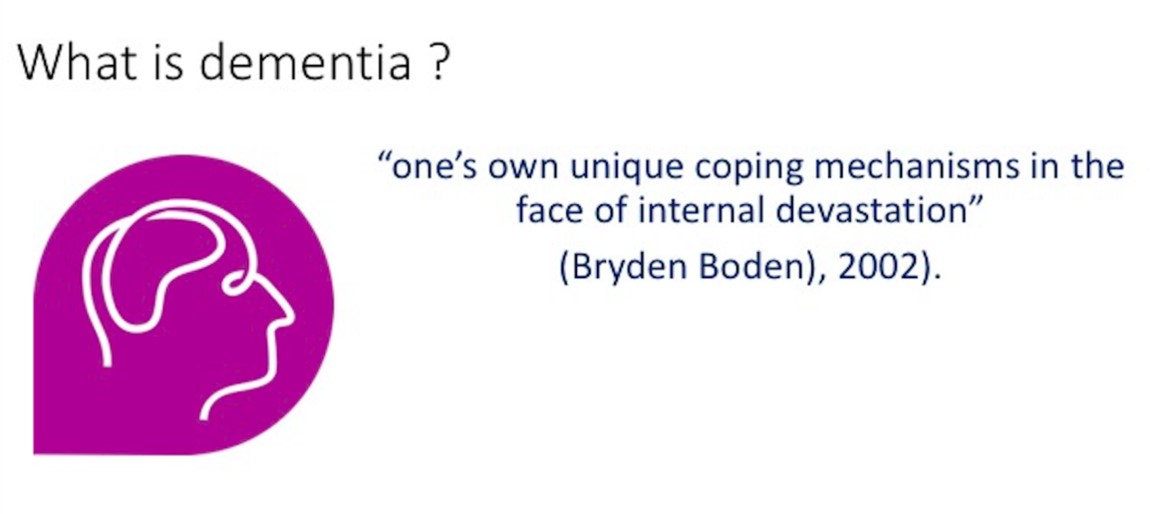
I return to her definition regularly to ground my thinking. Bryden doesn’t mention ‘syndrome’, ‘disorder’ or ‘disease’. Instead, she frames dementia around an individual’s experience. It certainly helps to see ‘behaviors’ in this light and serves as a reminder that people with dementia are doing their best at a time of profound threat.
Canvassing views
Although I had the idea to create a digitally enabled communication bridge, I did not know what shape or form this would take. What was important was to gain a deeper understanding of people’s communication needs. With this aim, I ran a series of focus groups with people experiencing dementia first-hand. Here is a synthesis of their comments:
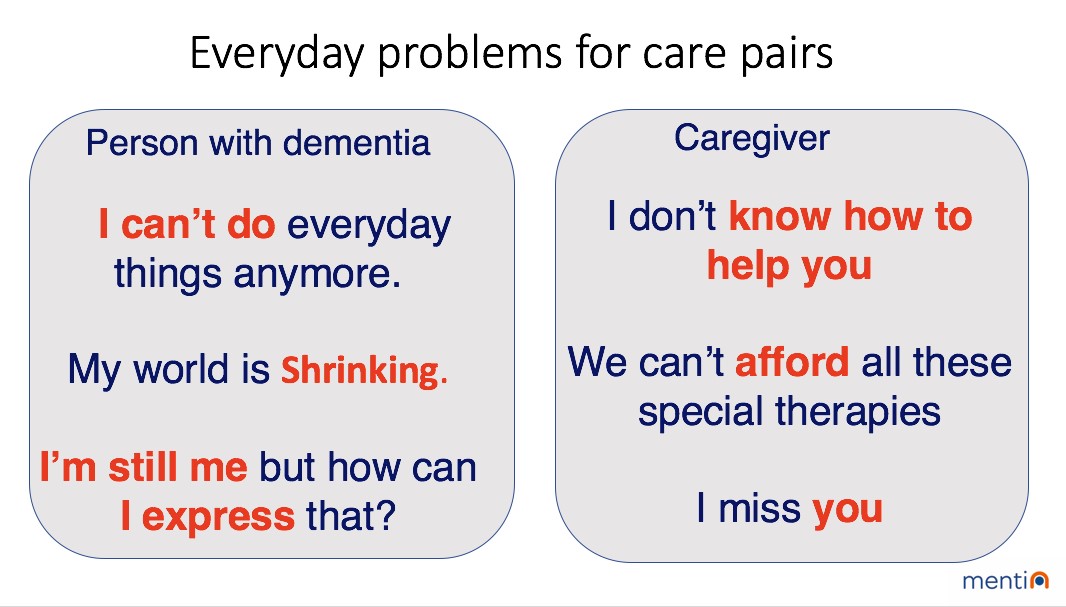
Notice there are two silos: in one, we have an illness that robs people of their independence; in the other, we have caregivers who are frustrated that they can’t do more. Coming from the media and communications world, it didn’t seem logical to have so many potential connection points, yet there was no bridge. What if people with dementia had greater agency, and what if their supporters could have a hand in that? I thought again about the physically disabled people I’d met who felt a renewed sense of identity in online games worlds and wondered if some sort of immersive environment could be that bridge.
Co-designing
The next step was to find what apps were currently helping people build bridges. I reviewed the academic literature, stalked the internet, and surveyed local aged care communities and agencies. In a literature survey, researchers commonly looked at how mobile devices were used rather than the content hosted on them. Contrastingly, care staff and therapists showed a good deal of curiosity about content, trying off-the-shelf programs designed for general audiences or children.
Some apps were good for passing short amounts of time, like colors that swirled as fingers dragged across the screen or bubble popping. Conventional puzzles that had been digitized, like solitaire, jigsaws, and tic-tac-toe, had appeal. Many flash games were disappointing: too noisy, too many popups, convoluted, or so buggy that continuity of play was impossible. There was work to be done.
I recruited ten memory care residents to show me how they used them. It soon became clear which themes they found interesting and the kinds of interactions they could manage.
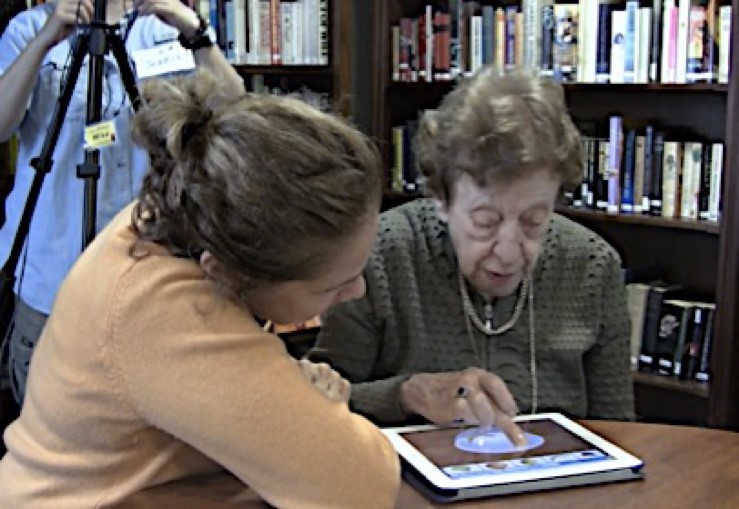
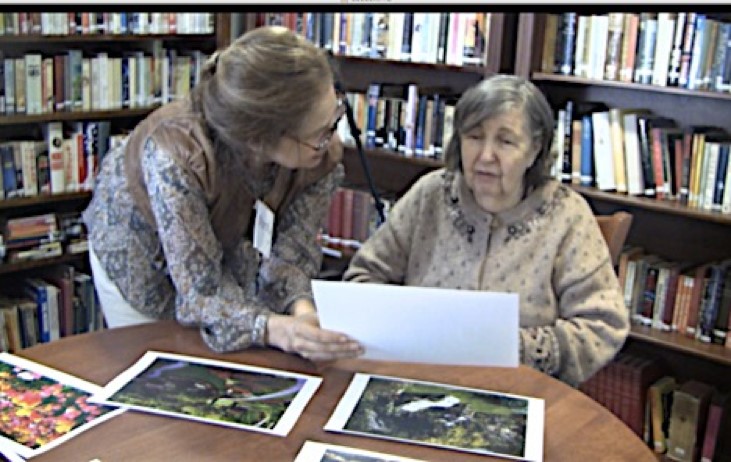
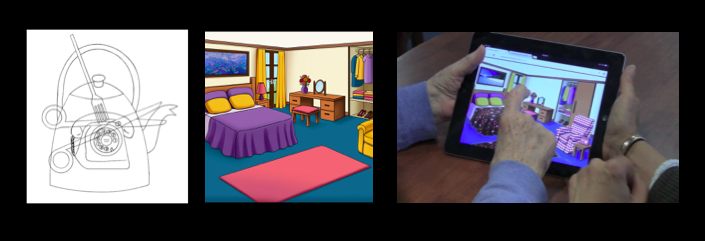
I also prepared a series of images related to everyday life to gain a sense of alternative content and elements [above, right].
The image selection was influenced by Tom Kitwood and colleagues from the Bradford Dementia Centre (UK). Two decades earlier, they had established that care home residents who undertook activities that held personal meaning had higher states of well-being than those who did not.
A challenge was that some participants had difficulty finding words to express their preferences. My workaround for this was to draw on Cameron Camp et al.’s adapted Montessori method, devised for communicating and engaging people with significant dementia.
The co-design phase extended over four months, with visits to participants every two weeks. Sometimes our software design team would attend and take notes.
Engagement
In parallel to the design, I investigated principles of engagement across three disciplines: dementia studies, human-computer interaction, and media, and married these with participants’ responses. I then formed a tentative set of principles that I considered a technology would need to bring about digital engagement for people living with dementia. Based on these principles, I set to work with a graphic designer, drawing up settings where playful interaction could occur.
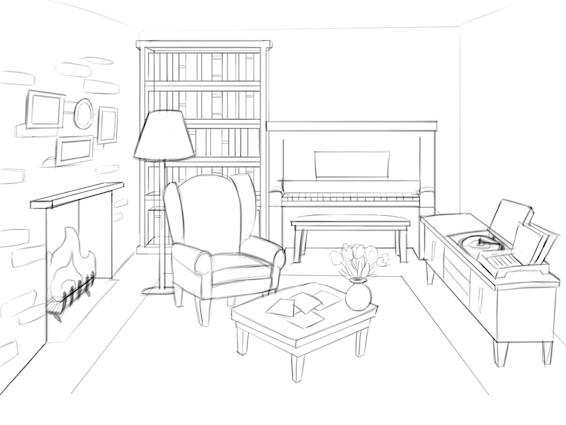
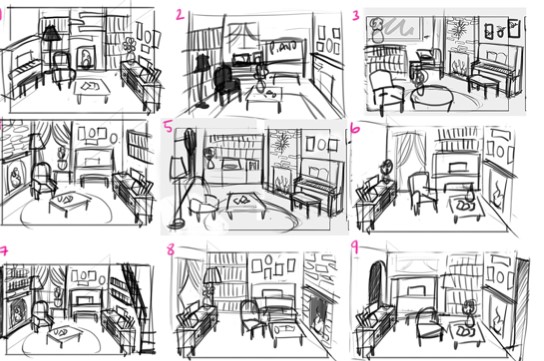
We worked on three environments: a bedroom, a garden, and a sitting room, incorporating guidelines for dementia-friendly architecture from Australia, the Netherlands, and the UK.
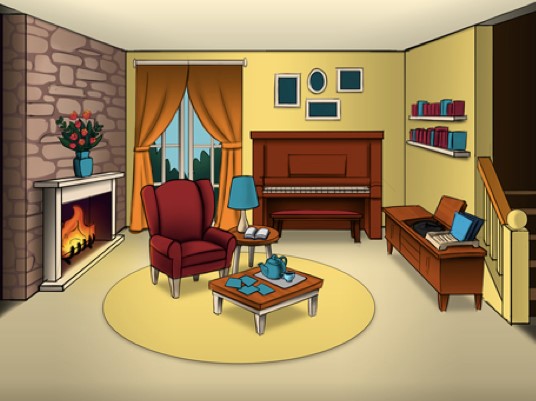
The participant group reviewed the plans, resulting in a final iteration.
We moved from still images to storyboards to low-fidelity mockups.
Care staff became very excited when a participant, Cora, who could not decode the objects in this drawing…
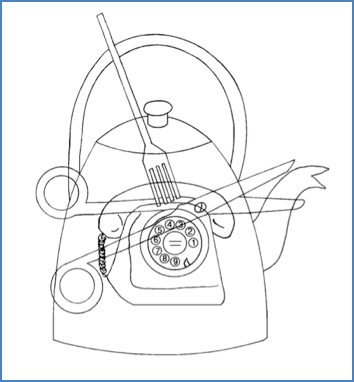
This was a significant moment – we realized our world could bring people a sense of agency. Watch the moment here.
The characters inside DevaWorld
Tom Kitwood wrote that to live well with dementia, one needs the help of “supportive others”. We respected his mantra by creating in-world companions to provide a focus, promote social interaction and engender a sense of place.
Unlike virtual service agents, we wanted our characters embedded within the world, actively engaging and responding to their environment. We also wanted them to have a degree of vulnerability so that participants would be motivated to help them.
Meet Julie:
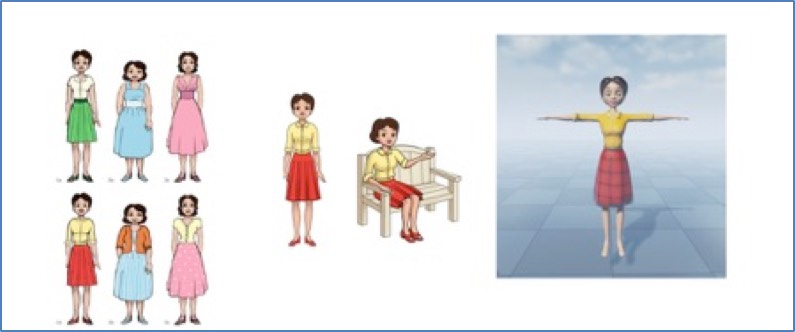
Julie was developed with the help of memory care residents. I showed them various graphical and photographic images depicting people in vocational and family settings.
Pictures of the actress Julie Andrews in her film role, Mary Poppins, drew universal approval. Respondents saw her as happy and helpful, familiar and kind.
The bird sitting on Julie’s finger links us to the natural world and is a reminder of the loving acceptance of family pets.
Responding to the interest in Julie’s bird and the literature on animal-assisted therapy, we built a garden for Julie and her feathered friend. It’s a calm place where people can play music or collect fruit and vegetables. The shed leads to a barn and paddock where a horse, goat and dog hang out.
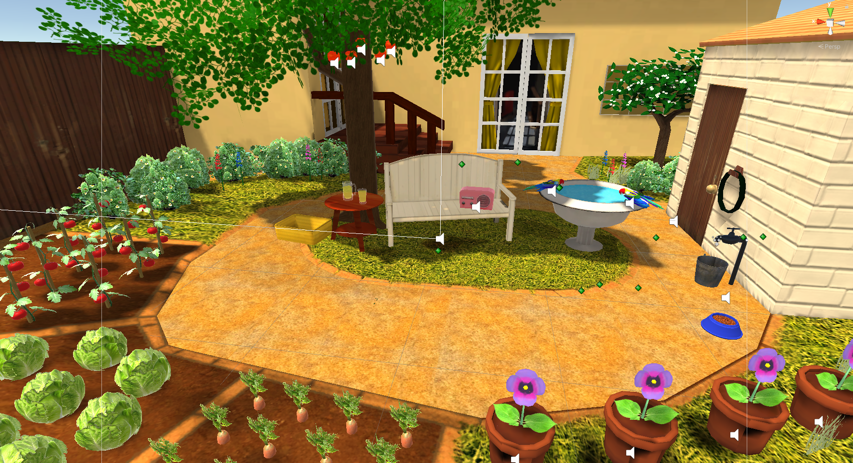
Here is the fully rendered Julie in the opening scene of DevaWorld.
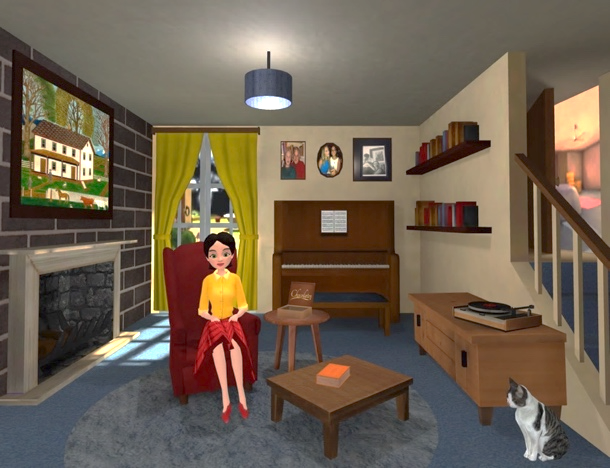
And here’s Robin, our latest addition; our tribute to the brilliant performer and actor, Robin Williams, who succumbed to Lewy Body dementia.
Support for caregivers
With critical staff shortages and massive growth in aging populations, reducing caregiver stress is top of mind.
Our system helps by rapidly building bonds and forging conversations beyond stock exchanges. We do this through a mix of “intra-world” engagement – interacting with stimuli inside DevaWorld and “extra-world” engagement, which occurs between the care dyad. Both extra and intra-world engagement were conceptualized at the design stage.
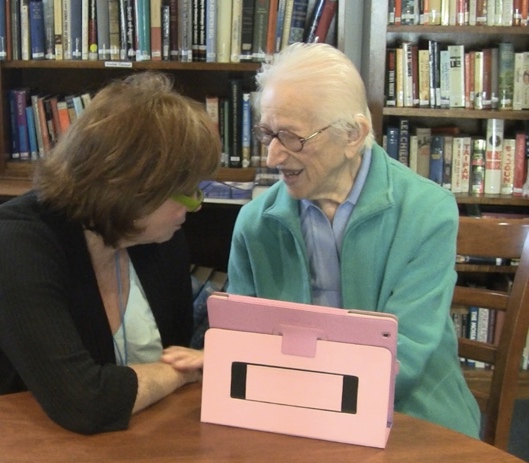
Player pairs sit close to one another, may smile at each other, share a song, or chat. There may even be hugs and handholding as they navigate their session together and respond to the rich media they encounter, which leads to a deeper understanding.
Watch a short video of Ellie and Agnes here.
Clinical and non-clinical studies
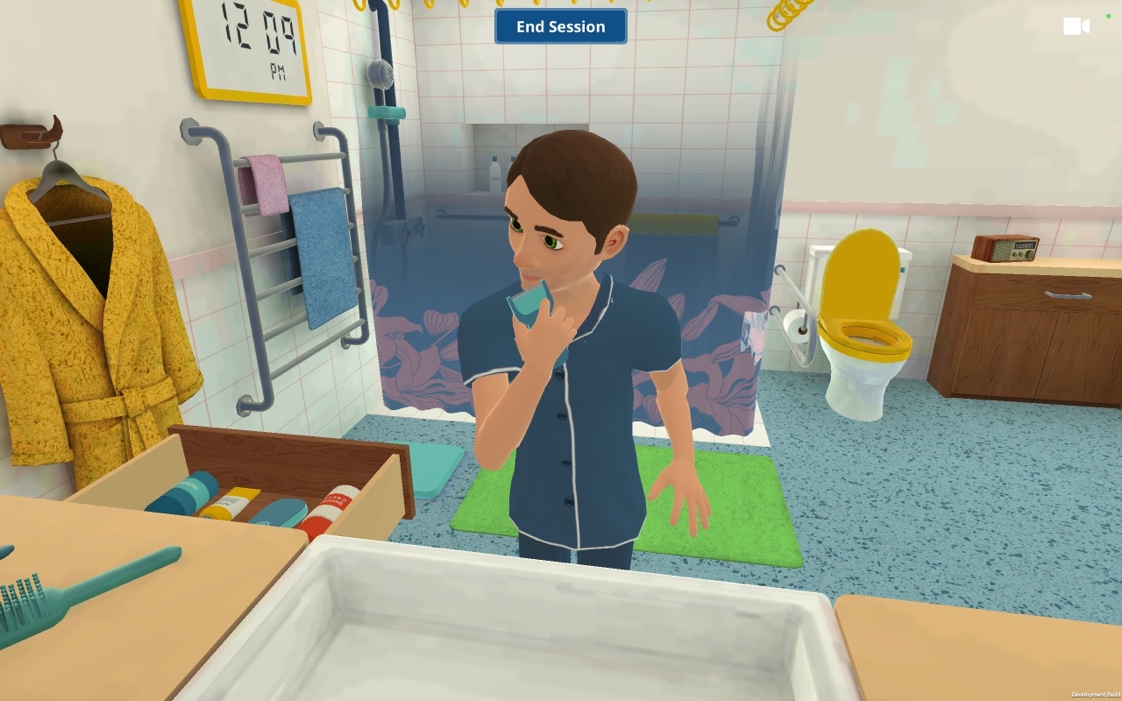
We are proud to be an NIH-NIA portfolio company. As an awardee of the SBIR grant, we are running a Phase 1 clinical trial to assess DevaWorld’s impact on everyday tasks such as mouthcare, dressing, and preparing for bed. This two-site study involves memory care communities in Oakland and Sacramento. It was completed in Q2:2023.
We survey caregivers and observe engagement through video recording reviews and a set of measuring instruments. Non-clinical evaluations and small-scale feasibility and usability studies are also ongoing. Participants are encouraged to self-assess. Some participants are quite strident in their views; for example, one participant who usually had trouble forming words enquired about the price and made suggestions for distribution.
Findings consistently show:
- Session durations often exceed 30mins
- Participants accept the space, time and physics of the world
- Participants can navigate, and effect change in DevaWorld
- Participants average one interaction every 11 seconds
- Once set up, some participants play on their own and can play with others
- Caregivers observe improvements in their person’s mood state and levels of cooperation
- Staff consistently report learning of client’s new stories and life events during a DevaWorld session
- Residents are relaxed and settled after a session
- DevaWorld can assist with PT and other health-related activities by stimulating and energizing the person beforehand
We’ve presented our research at a range of medical, brain health and dementia conferences, including Connected Health, the Dementia Action Alliance (US), the international conferences of Alzheimer’s Australia and Alzheimer’s Europe, Trinity University (IE), the Dementia Services Research Centre, Stirling University (UK)
Moving to AI
DevaWorld is a cloud-based service downloaded as an app for IOS and Android tablets. We use the Unity® game engine to construct our world.
The biggest issues we face is the global shortage of caregivers. Even if all of them adored the idea of a virtual world, they never had the time to use DevaWorld.
We therefore developed an AI based dialog model in the avatar, so that they could converse with the person with dementia with minimal involvement of the caregiver. DevaWorld then became MentiaCompanion.
See a video of the companion here.
About Mentia Health
Mentia Health is a digital health company building scalable person-centered cognitive therapies for older adults.
Headquartered in California, we operate in North America, Australia and Europe